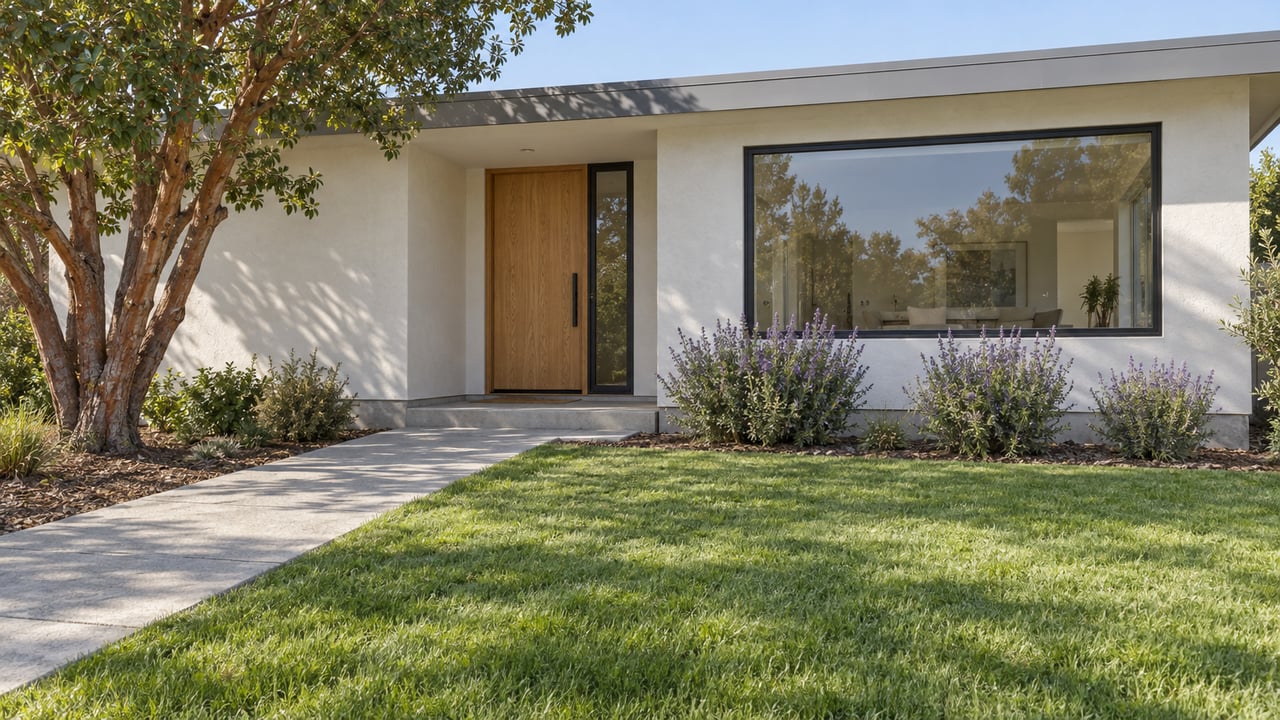
Todd Koerner has been renting a spare bedroom in his Manhattan Avenue home to Airbnb guests since 2012. No neighbor ever filed a complaint about it, according to his own testimony in court. The Hermosa Review reported that Hermosa Beach cited him $2,500 under a citywide short-term rental ban adopted in 2016. Koerner sued. In March 2026, a Los Angeles Superior Court judge ruled that Hermosa Beach's ban was never legally enforceable in the coastal zone in the first place, because the city had never gotten the sign-off it needed from the California Coastal Commission before adopting it.
That single ruling reopened roughly 43 percent of Hermosa Beach's 1.4 square miles to short-term rentals, a swath running from the sand out to the Valley/Ardmore Greenbelt. If you're weighing an investment property in the Sand Section against something similar in Manhattan Beach or Redondo Beach, the ruling itself is not the number that should change your math. The number that should change your math is how long the current rules are actually built to last.
The mechanism nobody was voting on
The Coastal Act, the 1976 state law governing land use along California's coastline, requires cities to get a Coastal Development Permit before changing the intensity of use on coastal land. Hermosa Beach's 2016 ban treated short-term and long-term rentals as legally identical up to that point, so banning stays under 30 days counted as a change in intensity of use under the Act. The city never got Commission approval for that change. As Easy Reader News reported, Judge James Chalfant found that omission fatal to the ban, dismissed Koerner's citation, and issued a permanent injunction blocking enforcement anywhere in the coastal zone until the city gets the approval it skipped a decade earlier.
The court's conclusion also had an earlier echo. As Easy Reader News reported, a hearing officer who reviews citation appeals for the city had ruled the ban invalid in the coastal zone in a prior appeal, well before Koerner's case reached a judge. As Easy Reader News reported, Frank Angel, the Santa Monica land use attorney who represented Koerner, had been making this exact argument against coastal cities for years, and had already won it once against Hermosa's neighbor. That history makes this less a story about Hermosa Beach's council changing its mind and more a story about how the Coastal Act applies to a rule written in 2016.
Manhattan Beach already ran this experiment
Manhattan Beach banned short-term rentals in its own coastal zone in 2016, the same year and on the same legal footing Hermosa Beach later relied on. A court struck Manhattan Beach's ban down in 2019 on the identical theory, and Manhattan Beach spent roughly $1 million appealing the decision unsuccessfully, all the way to the California Supreme Court, before accepting the outcome.
What Manhattan Beach's coastal zone looks like now is the closest thing to a preview Hermosa Beach investors have. In fiscal year 2024-25, Manhattan Beach collected $1.7 million in transient occupancy tax from 191 registered short-term rentals operating in its coastal zone. That is a formalized, taxed, permitted market that took years to build out after the ruling that created it.
Hermosa Beach's council watched that outcome and, when its own case landed the same way, chose not to repeat Manhattan Beach's appeal. The vote not to challenge the Koerner ruling passed 4 to 1 in closed session on May 12, 2026. The reasoning one councilmember gave publicly afterward pointed straight at the city's balance sheet: Hermosa Beach is carrying a $3.2 million structural deficit and an unfunded capital improvement backlog estimated between $90 million and $220 million, and untaxed short-term rentals had been sitting outside that revenue picture for a decade.
What the new ordinance actually requires
On September 8, 2026, the City Council adopted Ordinance No. ORD-26-1502, formalizing what the court ruling had already made legally unavoidable. Any short-term rental operating in the coastal zone must now register with the city, provide the owner's contact information and a local emergency contact, meet applicable safety requirements, hold a City business license, and collect and remit the city's transient occupancy tax, set at 14 percent, which the Hermosa Review reports matches Manhattan Beach and runs two points above Redondo Beach and El Segundo. The ordinance also adds reporting and auditing requirements for the platforms that list these properties, not just the owners.
The vote was close: 3 to 2, with Mayor Pro Tem Keegan and Councilmembers Francois and Saemann in favor, and Mayor DeToy and Councilmember Jackson opposed. Part of the floor debate had nothing to do with whether the ordinance was legally required and everything to do with what comes next. Some councilmembers pushed for a full environmental review before formalizing anything, citing traffic, noise, trash, and school enrollment as downstream effects worth studying. The city attorney's position, which prevailed, was that the ordinance only formalizes an administrative status the court had already settled, and doesn't authorize any new construction or land use change on its own.
Before this ordinance, the city had issued only nine short-term rental permits since 2016, each costing $1,500 a year, even as roughly 200 to 300 distinct listings were tracked across booking platforms over a full year. Those unpermitted properties paid nothing in transient occupancy tax while the nine permitted operators generated $189,000 in fiscal year 2024-25. City staff, presenting estimates at the August 25, 2026 council meeting, put the number of listings actually live and bookable in an average month closer to 65, well below that full-year total, and projected roughly $1 million in annual tax revenue once registration catches up with what's already operating.
The six months that decide what this actually becomes
The ordinance the council passed is explicitly interim. Citizen Portal reported that staff were directed to spend the next six months collecting usage, enforcement, and complaint data before returning to the council with an evidentiary record built for an actual Coastal Commission application, the formal application Hermosa Beach never filed for its original ban and still doesn't have for whatever comes next. That future application could include caps on the number of permitted units, concentration limits by block, or eligibility criteria that don't exist yet.
This is the detail that matters most to anyone underwriting a purchase in the Sand Section on the assumption of short-term rental income. The rules in effect today, registration, the 14 percent tax, the business license, are the rules that exist while the city gathers the data it needs to write permanent ones. Manhattan Beach's 191-permit, $1.7 million market took years to stabilize after its own ruling. Hermosa Beach is still in the data collection phase of that same process, with a return date to council built into the ordinance itself rather than left open-ended.
None of this is legal or tax guidance, and the specifics of registration, TOT collection, and how a lender or insurer treats short-term rental income are questions for a coastal land use attorney and a CPA who know your particular property. But the pattern across two neighboring cities is now visible enough to name directly: a coastal STR ban on the books tells you almost nothing about whether short-term rentals are actually prohibited. What tells you something is whether that ban ever secured Coastal Commission approval. Hermosa Beach's didn't, for a decade, and the six months the city just gave itself are the clearest signal available for how the next chapter gets written.
If you're weighing a Sand Section property against comparable coastal investments in Manhattan Beach or Redondo Beach, and the short-term rental math is part of that decision, I'd rather walk you through what's provisional and what's likely to hold before you write an offer than after. Reach out to Rachel Ezra for a property-specific read on where the coastal zone rules stand today and what the next six months are likely to change.
This article is general information, not legal, tax or financial advice. Consult a qualified professional about your situation.