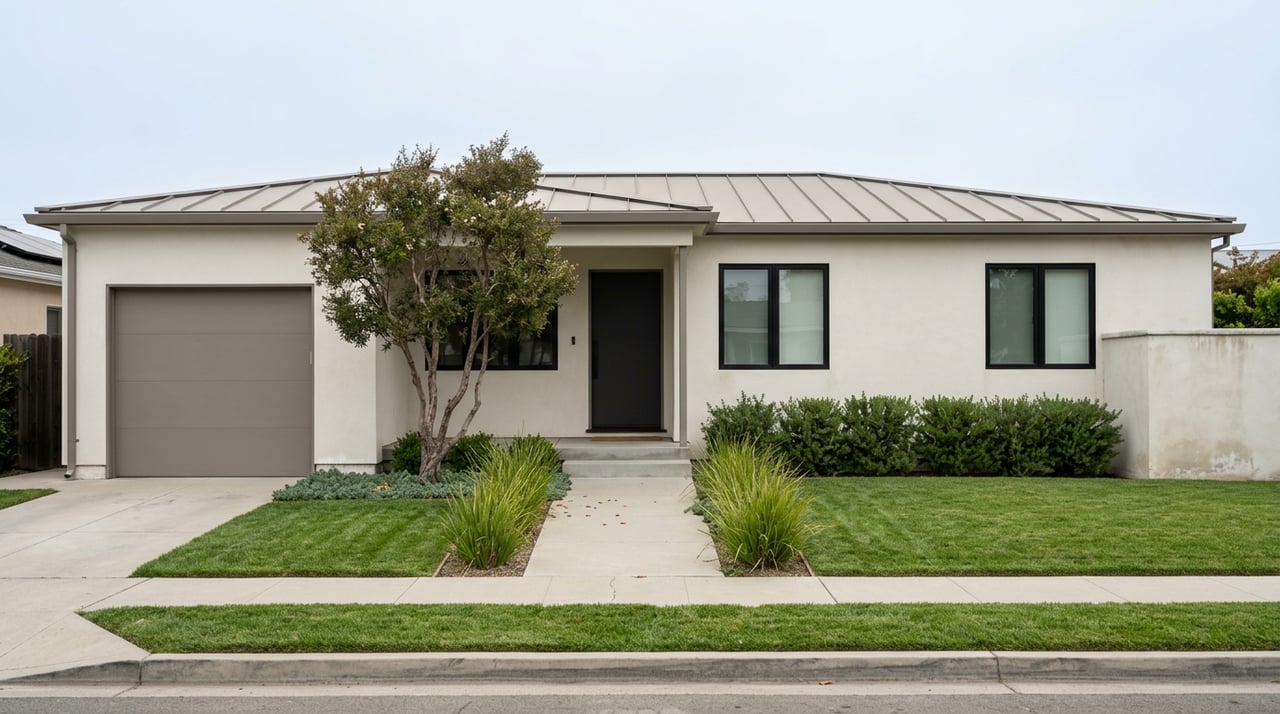
Every spring 2026 headline about El Segundo real estate carried the same subtext: buy now, because SpaceX is about to mint thousands of local millionaires and the wave of newly liquid buyers is coming for your neighborhood. The Los Angeles Times called Manhattan Beach and El Segundo "ground zero" for the rush. Agents across the South Bay told clients the window to buy before the surge was closing fast.
Five months later, the surge has not shown up in the way anyone described it. Not because SpaceX's IPO wasn't real. It was the largest in history. But because the mechanism connecting a stock price to a house closing is slower, stranger, and more staggered than the spring coverage let on, and El Segundo's own spring sale data, gathered before the IPO even priced, already looked softer than the boom narrative predicted. If you're comparing El Segundo to Manhattan Beach, Redondo Beach, or Torrance right now, the timeline matters more than the valuation headline.
The Number Everyone Quoted, and the Number That Followed It
SpaceX priced its IPO at $135 a share and raised $75 billion, the biggest public offering on record. Shares opened trading and closed their first day at $161, up more than 19%. Four days later, on June 16, 2026, the stock hit its post-IPO peak of $225.64.
That peak is the number most of the spring housing predictions were built on. It's also the number that stopped applying almost immediately. SpaceX's first earnings report as a public company, released August 4, disappointed investors despite $7.8 billion in quarterly revenue. Shares dropped more than 10% the next day, closing at $108.27 on August 5, a decline of more than 50% from the June peak, just one day before the first block of insider shares became eligible to trade.
This matters for El Segundo specifically because the "SpaceX millionaire" thesis assumes a fixed amount of paper wealth converting cleanly into home down payments. A stock that's lost half its value in eight weeks converts into a much smaller number of actual dollars, even before anyone accounts for the second problem: most of that wealth wasn't tradable yet anyway.
Why the Money Doesn't Arrive All at Once
Traditional IPOs use a single 180-day lockup. Every insider share becomes tradable on one date, and the market absorbs the supply shock at once. SpaceX didn't do that. It built a staggered, nine-stage release schedule instead, spreading eligibility across the second half of 2026.
Here's the actual calendar, drawn from the company's SEC filings:
| Release Window | What Unlocks |
|---|---|
| August 6, 2026 (2nd trading day after Q2 earnings) | Up to 20% of eligible insider shares, roughly 911.5 million shares |
| Performance bonus (tied to Q2 earnings window) | An additional 10% if the stock closed 30%+ above the $135 IPO price on 5 of 10 trading days into earnings. It didn't, so this tranche rolled forward. |
| Days 70, 90, 105, 120, 135 post-IPO | 7% released at each of five separate dates |
| 2nd trading day after Q3 earnings | Up to 28% more |
| Day 180 (December 8, 2026) | All remaining restricted shares |
| Elon Musk's roughly 6.4 billion shares | Locked separately for 366 days, until June 2027, with no early release |
The practical effect: there is no single date when El Segundo's housing market absorbs a wave of SpaceX cash. There are at least six separate decision points running from early August through the end of the year, each contingent on the stock's price at that moment, and the largest individual stake in the company won't be sellable until next summer. A stock trading below its IPO price also changes employee behavior. Selling at a loss relative to peak paper value is a very different decision than selling into a rally, and financial advisors working with SpaceX equity holders have been telling clients to model their capital gains timing across 2026 and 2027 rather than assume a single cash-out moment.
What El Segundo's Own Sales Data Shows So Far
If the boom were arriving on schedule, El Segundo's transaction data through the first half of 2026 should already show it. It doesn't.
Over the three months ending May 2026, the median sale price for a home in El Segundo was $1.6 million, down 11.4% from the same period a year earlier. Twenty homes sold that month, compared to 31 in May 2025. Homes also sat slightly longer, averaging 29 days on market versus 28 a year prior.
One figure moved the other direction: the median price per square foot rose 6.2% year over year to $869. Read together, those two numbers suggest a market where smaller, more efficiently priced homes are still transacting while larger or higher-priced listings are taking longer to find buyers, not a market being outbid by newly wealthy engineers waving vested RSUs.
Separately, algorithm-based home value estimates told a rosier story. One widely cited home value index put El Segundo's average value at roughly $1.75 million as of June 2026, up 4.3% for the year. The gap between an estimated value trending up and an actual median sale price trending down is itself worth sitting with. It means the confidence built into forecasting models hasn't yet been tested by real closings, which is exactly the gap a careful buyer or seller should want explained before pricing a listing or writing an offer.
The Demand Driver That Didn't Make the Spring Headlines
The SpaceX stock story is not the only reason El Segundo's housing fundamentals matter, and it may not even be the most durable one. A few blocks from downtown, the 120-acre Smoky Hollow district, an industrial zone named for the refinery smoke that once settled there in 1911, has quietly become the densest concentration of hard-tech startups in Los Angeles County.
According to Commercial Real Estate Advisors broker Erik Stiebel, El Segundo now houses 32 hard-tech companies, more than the City of Los Angeles, Torrance, or Long Beach. Founders of firms like Valar Atomics, Rainmaker Technology Corp, and Cambium have described a startup culture built directly on SpaceX's talent pipeline. Cambium's leadership has pointed to a "SpaceX effect" of former employees launching new ventures in the same few blocks where they used to work, drawing on a shared engineering talent pool from SpaceX, Northrop Grumman, Boeing, and RTX.
That distinction matters for anyone trying to size up El Segundo's demand curve. A single company's IPO timeline is volatile and contingent on quarterly earnings and lockup mechanics. A cluster of founders who already cashed out from earlier ventures, chose to stay in El Segundo, and are now building the next generation of companies a few blocks from downtown is a structural, multi-year demand signal that doesn't depend on where SPCX trades in any given week.
What This Means If You're Comparing El Segundo Right Now
If you're weighing El Segundo against Manhattan Beach or Redondo Beach as a place to buy, the SpaceX headline number is the least useful data point available to you. The more useful ones are the ones that actually describe timing and behavior:
The next scheduled unlock windows fall on the 90, 105, 120, and 135-day marks after the June IPO, followed by a Q3 earnings release and the final December 8 lockup expiration. Any acceleration in local buyer activity tied specifically to SpaceX liquidity is more likely to show up in the fourth quarter of 2026 or into 2027 than it was to show up this summer.
Meanwhile, El Segundo's actual comparable sales, not algorithmic estimates, are the number to track block by block. Whether a specific home sits on the market longer than that 29-day average, or trades above or below the $869-per-square-foot benchmark set in May 2026, tells you more about what your money buys today than any projection about future SpaceX wealth.
And the Smoky Hollow ecosystem is worth understanding independent of any single company's stock chart. A neighborhood that's already producing its own founders and reinvesting them locally has a different long-term demand profile than one waiting on an external liquidity event to arrive.
A Few Questions Worth Answering Directly
Does the SpaceX stock drop mean El Segundo home prices will fall? Not necessarily. The stock's decline mainly affects the size and timing of a hypothetical future demand surge tied to employee stock sales. It doesn't reverse the underlying scarcity of single-family inventory in El Segundo, which has been a structural feature of the market for years independent of any one employer.
When would a SpaceX-driven buying wave most likely become visible in the data? Based on the release schedule, the most concentrated unlock events land around the Q3 2026 earnings release and the December 8, 2026 lockup expiration. Any measurable shift in comparable sales tied specifically to that liquidity would be more likely to appear in transaction data from late 2026 into 2027.
Is El Segundo still a competitive market for buyers even without a SpaceX-driven surge? Yes. Low inventory and short days on market for well-priced listings have characterized El Segundo for years, driven by its small footprint, strong schools, and dense aerospace and hard-tech employer base, independent of any single company's stock performance.
If you're trying to time a purchase or a sale against a moving target like this, the safest approach is a pricing strategy built on what's actually closing on your block right now, not on what a stock ticker might do next quarter. That's the kind of read that requires someone tracking El Segundo's inventory and comparable sales week to week, not just watching headlines.
Rachel Ezra has spent years inside the South Bay market watching how national stories like this one actually land locally, block by block. If you're weighing a move in or around El Segundo and want a clear-eyed read on what your home is worth in this specific window, request a complimentary home valuation and get a pricing strategy built on real comparables, not projections.