The Timeless Romance of the Summer Veranda
Bridging the gap between indoor and outdoor living, the veranda’s versatility is part of its enduring allure.
here are few pleasures of summer quite like spending time outdoors. But when the midday sun becomes intense, having a comfortable, shaded place to retreat becomes essential. Long before today’s emphasis on seamless indoor-outdoor living, homeowners were already using architecture to make the transition between the two more comfortable.
By the 1700s, verandas had become an important feature of homes throughout the American South. Typically designed as an open-air porch protected by an extension of the roof, the veranda offered welcome shade from the heat while providing shelter from rain and wind.
Its architectural history reaches much further back. Similar covered outdoor spaces can be traced to ancient dwellings across the Indian subcontinent. The concept eventually made its way into British and American architecture through colonial development.
Today, the veranda remains a highly desirable feature in luxury homes across the United States. Its appeal lies in its versatility: it provides an inviting setting for entertaining, relaxing, dining, or simply enjoying the outdoors without giving up the comforts of home.
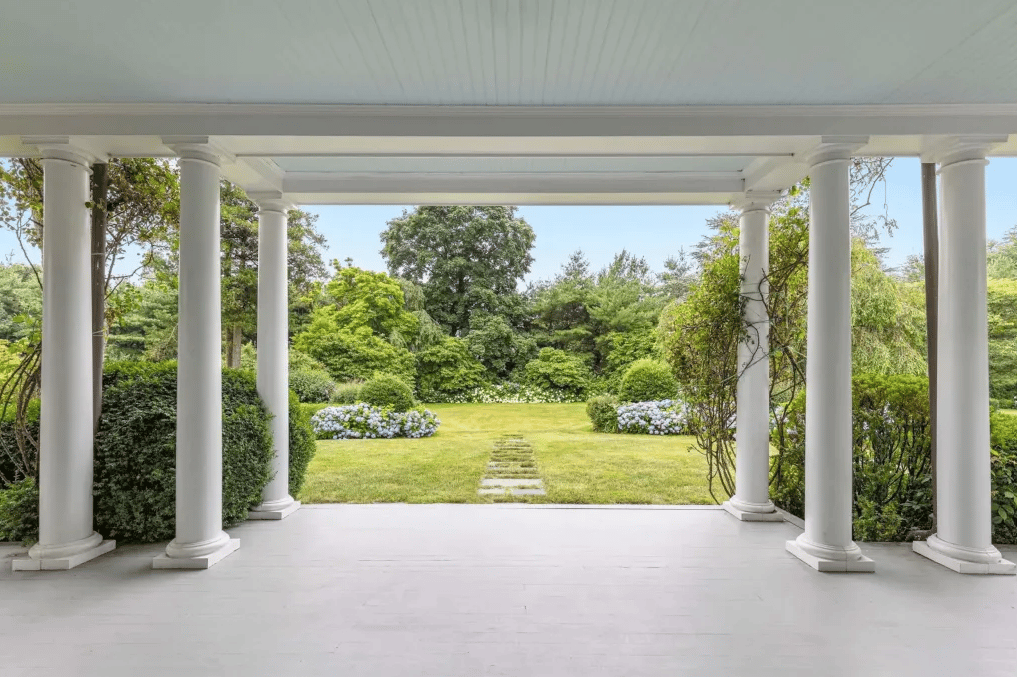
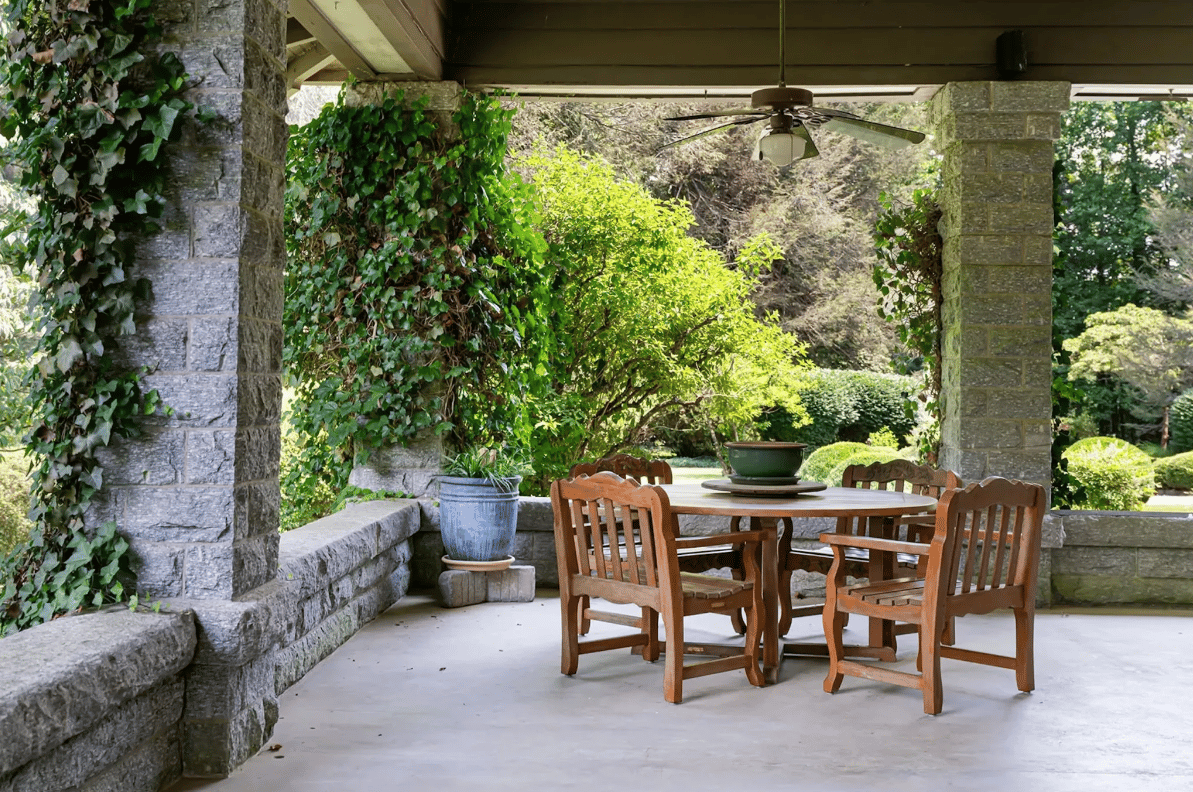
Purchase, New York | Julia B. Fee Sotheby’s International Realty
Architect Jeffrey Dungan, whose architecture and design studio is based in Mountain Brook, Alabama, sees that appeal as timeless.
“Verandas lend you the connection to the outdoors without the inconveniences that come with being truly outside.”
Traditionally, a veranda extends along the front and sides of a residence, effectively becoming what Dungan describes as a home's informal front entrance. Historically, it also served an important social function, providing a place to welcome and entertain guests—something akin to the role of a parlor in a traditional British home.
For homeowners who want a veranda to function as a true outdoor living area, scale matters. Dungan recommends depths of approximately 14 to 15 feet, giving residents enough room for comfortable seating, entertaining, and even outdoor dining beneath the protective roofline.
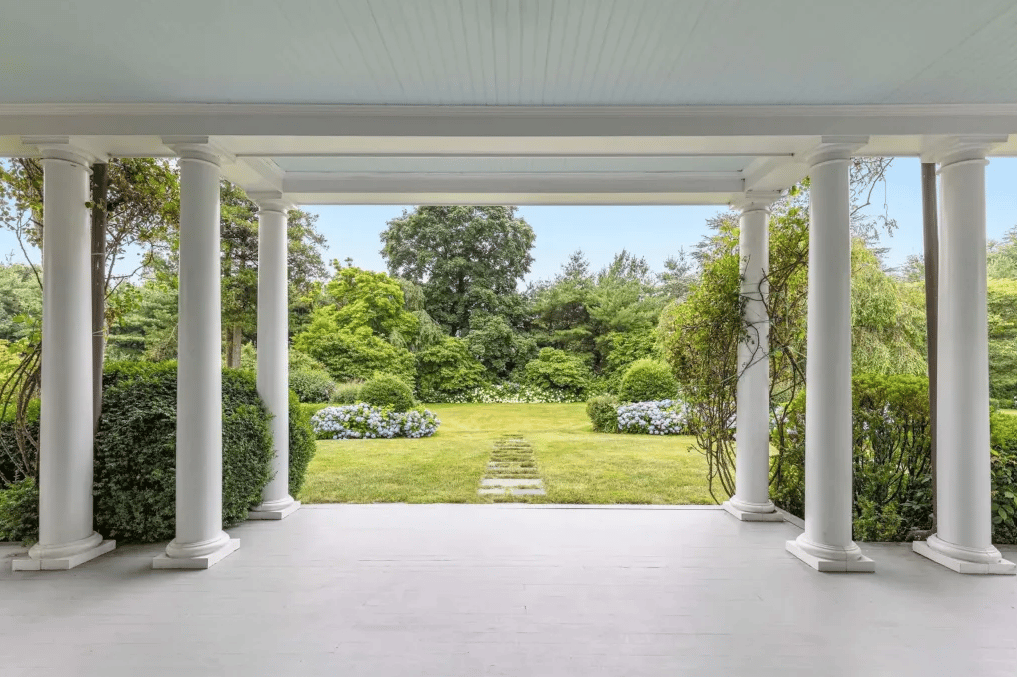
Hendersonville, North Carolina | Premier Sotheby’s International Realty
Historic Homes Where the Veranda Takes Center Stage
The sweeping veranda of this nine-bedroom Hendersonville home in North Carolina demonstrates how effectively a veranda can combine architectural history with outdoor living.
Originally constructed in 1855, the residence was redesigned roughly 50 years later by Richard Sharp Smith, a supervisor associated with North Carolina's renowned Biltmore Estate. The surrounding gardens also benefited from the influence of Frederick Law Olmsted, the celebrated landscape designer behind New York City's Central and Prospect Parks.
With contributions from both figures, the property earned a place on the National Register of Historic Places. Its expansive veranda provides substantial weather-protected outdoor space while opening views toward the surrounding landscape.
Another property with an equally fascinating history is this 1912-built estate in Purchase, New York. The estate served as an important filming location for the 1969 movie Goodbye, Columbus, based on the Philip Roth novella.
Its veranda, positioned beside the main living room, offers views across more than 11 acres of park-like grounds.
Although both residences date back more than a century, their approach to connecting interior spaces with the outdoors remains remarkably relevant to today's luxury homebuyer.
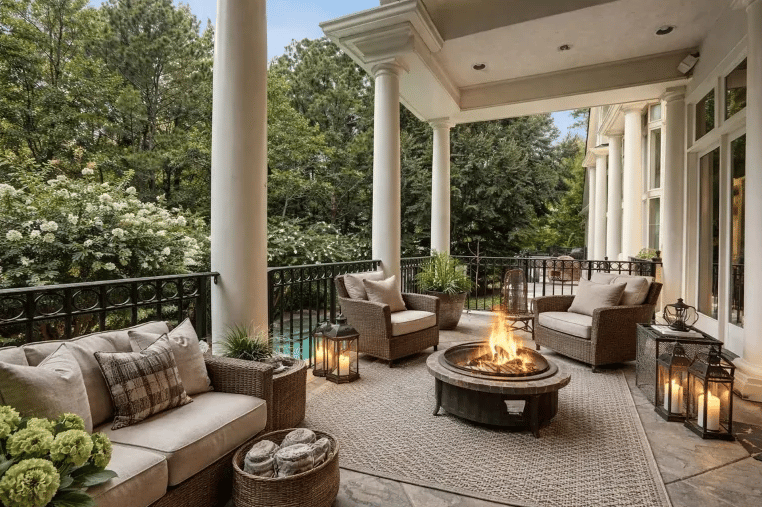
Johns Creek, Georgia | Atlanta Fine Homes Sotheby’s International Realty
The Veranda as an Everyday Living Space
The modern appeal of the veranda goes beyond entertaining. For many homeowners, it becomes an extension of everyday life.
Paul Wegener, global real estate advisor at Atlanta Fine Homes Sotheby's International Realty, describes the appeal this way:
“A great veranda becomes part of everyday life.”
It can be the setting for a morning coffee, an evening glass of wine, watching children play outside, or simply taking in a beautiful view. Rather than functioning as an additional room, a thoughtfully designed veranda offers homeowners another way to experience the spaces they already have.
One of Wegener's listings illustrates this concept particularly well. This six-bedroom Johns Creek, Georgia home, built in 1998, features second-story verandas extending across the entire rear façade.
The generous outdoor spaces effectively function as another living room—only with fresh air.
Comfortable furnishings, abundant seating, outdoor carpets, oversized lanterns, and even a firepit make the verandas feel intentionally designed for extended use rather than simply admired from inside.
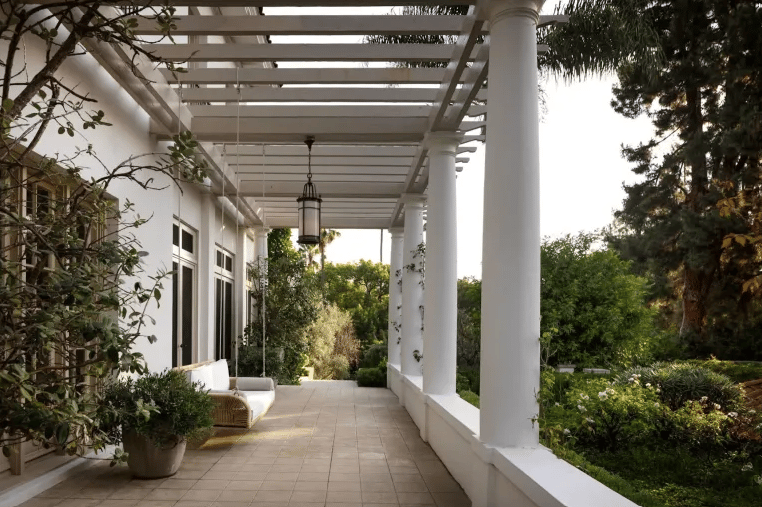
Los Feliz, California | Sotheby’s International Realty – Beverly Hills Brokerage
Designing for Warmer, Drier Climates
A veranda doesn't necessarily need to be completely enclosed or covered from edge to edge, particularly in areas where rainfall is limited.
A historic Hollywood estate once owned by filmmaker Cecil B. DeMille, built in 1913, offers a different interpretation.
Here, the rear veranda takes the form of a pergola, with a slatted roof that allows sunlight to filter through toward the large windows of the six-bedroom residence.
The approach is particularly relevant to today's climate-conscious approach to residential design. Limiting direct solar exposure can help reduce heat entering the home and, consequently, help manage interior temperatures.
The Veranda's Enduring Appeal
For Dungan, the veranda occupies a special architectural position between the controlled environment of a home's interior and the natural world outside.
“The veranda is the synaptic gap, or the connective tissue, between the interiors, the conditioned space of the house, and the outdoors.”
That may be why this architectural feature continues to resonate with luxury homeowners generations after it first became popular.
A great veranda is both romantic and practical. It provides shade and shelter, expands usable living space, creates opportunities for entertaining, and offers a closer relationship with the landscape surrounding a home.
Most importantly, it gives homeowners a place to slow down and experience their surroundings.
As Dungan puts it:
“Spaces that allow you to connect to nature and your surroundings are so special.”
And perhaps that is the true secret to the veranda's enduring appeal: it doesn't simply add another space to a home—it changes how the home is experienced.
Looking for a Home That Blends Indoor Comfort With Outdoor Living?
From expansive verandas and shaded terraces to ocean-view patios and beautifully landscaped retreats, the right outdoor living space can transform the way you experience a home.
If you're considering buying or selling a home in Manhattan Beach or throughout the South Bay, let's talk about what today's luxury buyers are looking for—and how the right property can complement the way you want to live. Connect with Rachel Ezra, Global Real Estate Advisor & Coastal Luxury Real Estate Specialist, to explore your next move.