For fifteen years, the barn-like building at Sepulveda and 2nd Street was where Hill Section residents went for potting soil, seasonal color, and the kind of plant advice you can't get from a big-box garden aisle. Jon Bell bought the place in 2009, at 28, after working there since he was 15. He named it Deep Roots. Then, this year, the rent caught up with him. He had to move the business about a mile away. "Manhattan Beach is just, unfortunately, pricing themselves out," he told Easy Reader News. "The rents are more than double if you go just a mile west of where we are now."
That single relocation tells you more about how the Hill Section actually functions than any list of restaurants ever could. This neighborhood has no commercial strip of its own. Walk any street between the ridge and Ardmore Avenue and you will find homes, driveways, and quiet. The dining, the shopping, the errands, all of it lives at the edges, borrowed from Sepulveda, PCH, and downtown. When one of those edge businesses gets squeezed out, the neighborhood feels it directly, because there was no backup two blocks over.
Understanding the Hill Section as a place with no main street of its own, and a short list of hard-won anchors instead, changes how you read everything else happening here this year.
A Neighborhood Built Without a Downtown
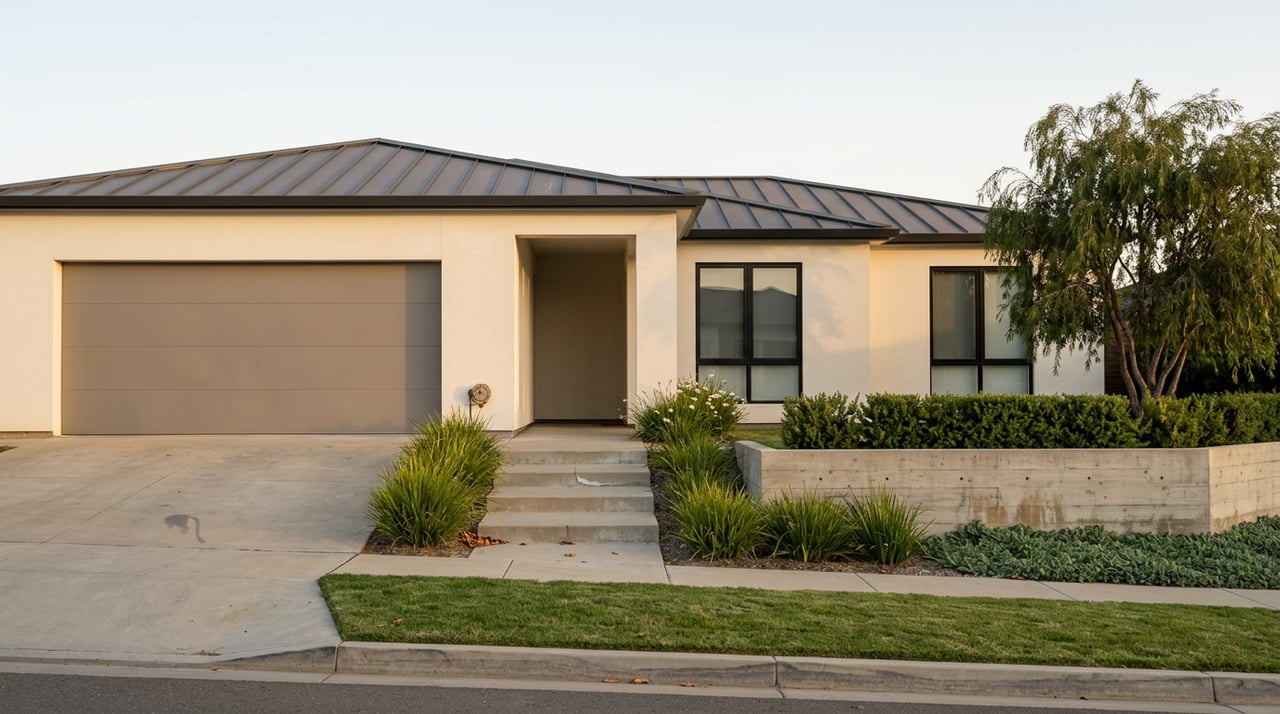
The Hill Section is residential in the strictest sense. Aside from a few office buildings along Manhattan Beach Boulevard, there is no retail or restaurant corridor running through it. That is by design and by topography. The hill's rolling lots gave the area its ocean and city views, but the same slopes that make those views possible left no flat commercial spine the way downtown or the Sand Section developed one.
What this means in practice is that Hill Section life gets stitched together from a handful of specific places just outside the boundary, not from a neighborhood center. There is no version of this piece that works as a generic "here's what's nearby" roundup, because the whole point is how few options there actually are, and how much weight each one carries as a result.
What Gelson's Actually Replaced
Start with groceries. Gelson's sits inside the Hill Section boundary, and residents who moved here before it opened remember the difference. Before Gelson's, a quality grocery run meant driving further, down into downtown or across to Manhattan Village. Having a full-service market inside the neighborhood changed the rhythm of an ordinary Tuesday. It is easy to take for granted now, but it is worth remembering that it was not always a given, and that the Hill Section has exactly one of these, not three or four to choose between.
That scarcity is the throughline. When Deep Roots had to leave its Sepulveda location, it did not relocate into some larger retail ecosystem that could absorb the loss. It left a gap. The neighborhood's businesses do not have redundancy built in, so each one that survives, or does not, moves the needle more than it would somewhere with a proper commercial strip.
Down the Hill for Everything Else
For dinner without getting in the car, the east side of the Hill Section is close to two PCH restaurants, Osho and El Gringo. That is the extent of the walkable dining list. Everyone else drives, and this year gives residents more reason to make that short trip down into downtown than they have had in a while.
Coucou, a French bistro concept already established in Venice and West Hollywood, took over the former Nando Trattoria space on Manhattan Avenue this year, bringing steak frites, oysters, and an aperitif hour to a room that had been waiting for the right operator. A few blocks away, Great White is set to open in the Metlox courtyard, taking over the space Pitfire Pizza used to occupy, with the kind of all-day grain bowl and fish taco menu that should give the courtyard a real daytime tenant instead of just another coffee stop. Bread Head took the former Tacolicious spot on Manhattan Avenue and turned it into a focaccia sandwich shop that has become one of the more talked-about lunch stops downtown this year.
None of that is Hill Section real estate. It is a five-minute drive from most of the neighborhood, less from the western edge. But it matters here precisely because the Hill Section has to import its variety rather than grow its own, and this year's crop of openings gives residents a genuinely better reason to make that drive than the same rotation of standbys they have relied on for years.
The Greenbelt Is the Sidewalk You Don't Have
If Gelson's solved the grocery problem, Veterans Parkway, known locally as the Greenbelt, solved the one about where to actually walk. This is a 21-acre linear park running along Valley Drive and Ardmore Avenue, built on the old Santa Fe Railroad corridor that hauled freight to Redondo Beach wharves back in the 1880s. Manhattan Beach purchased its section of the abandoned right-of-way in 1986 and renamed it Veterans Parkway in 1988.
The path is level for its entire length, a leftover benefit of the old rail grade, with benches and drinking fountains posted every quarter mile and a wheelchair-accessible exercise station between 10th and 11th Streets. Leashed dogs are welcome the whole way. Heading north from the Hill Section, the trail passes residential blocks before reaching the playing fields at Dorsey Field and Live Oak Park, which functions as the closest thing the Hill Section has to a shared green space of its own, even though technically it sits just outside the section's boundary.
For a neighborhood without sidewalks lined by shops, the Greenbelt is doing the job a commercial street would do somewhere flatter. It is where people run into neighbors, where dog walks happen on autopilot, where the daily loop gets logged. It is infrastructure, not scenery.
One Weekend in October
The Hill Section's connection to Live Oak Park gets its clearest annual expression in October, when the park hosts the Manhattan Beach Hometown Fair. This year's dates are October 3 and 4, 2026, running 10 a.m. to 6 p.m. both days. The fair started in 1972 and is still run entirely by volunteers, with more than 200 arts and crafts booths, food and game booths that raise money for more than 70 local civic and school organizations, live music, and a Kid Country section for younger visitors.
It is not a Hill Section event in the sense of geography. It happens at Valley Drive and 15th Street, technically East Manhattan Beach territory. But it is the one weekend a year when the Hill Section's residents, its Greenbelt walkers, its Gelson's regulars, all converge on the same patch of grass their daily walks already pass by. If you live on the hill and only interact with Live Oak Park through the dog run and the tennis courts most of the year, the fair is the reminder that this park is the neighborhood's actual town square, borrowed as it may be.
The Short List Is the Point
None of this reads like a neighborhood with abundant options. That is accurate, and it is also the thing worth understanding if you already live here. The Hill Section works because a small number of specific places carry an outsized share of daily life: one grocery store, two PCH restaurants, one long walking path, one park that hosts the fair every fall. When one of those anchors gets squeezed, as Deep Roots was this year, there is no deep bench of alternatives waiting to absorb the loss. You feel it.
That fragility is also what makes the neighborhood feel distinct rather than interchangeable with the Sand Section or the Tree Section. You are not choosing between a dozen coffee shops on a main street. You are relying on the handful that exist, which tends to build the kind of familiarity that comes from repetition rather than variety. Residents who understand that distinction get more out of the neighborhood than those still expecting a downtown that was never going to appear on these slopes.
If you are weighing what your Hill Section home is worth in a market where inventory stays this tight, or thinking ahead to a move within the neighborhood, Rachel Ezra can walk you through it. Request a complimentary home valuation and get a read on your property that accounts for the specific block, the view exposure, and what is actually happening on the hill right now.