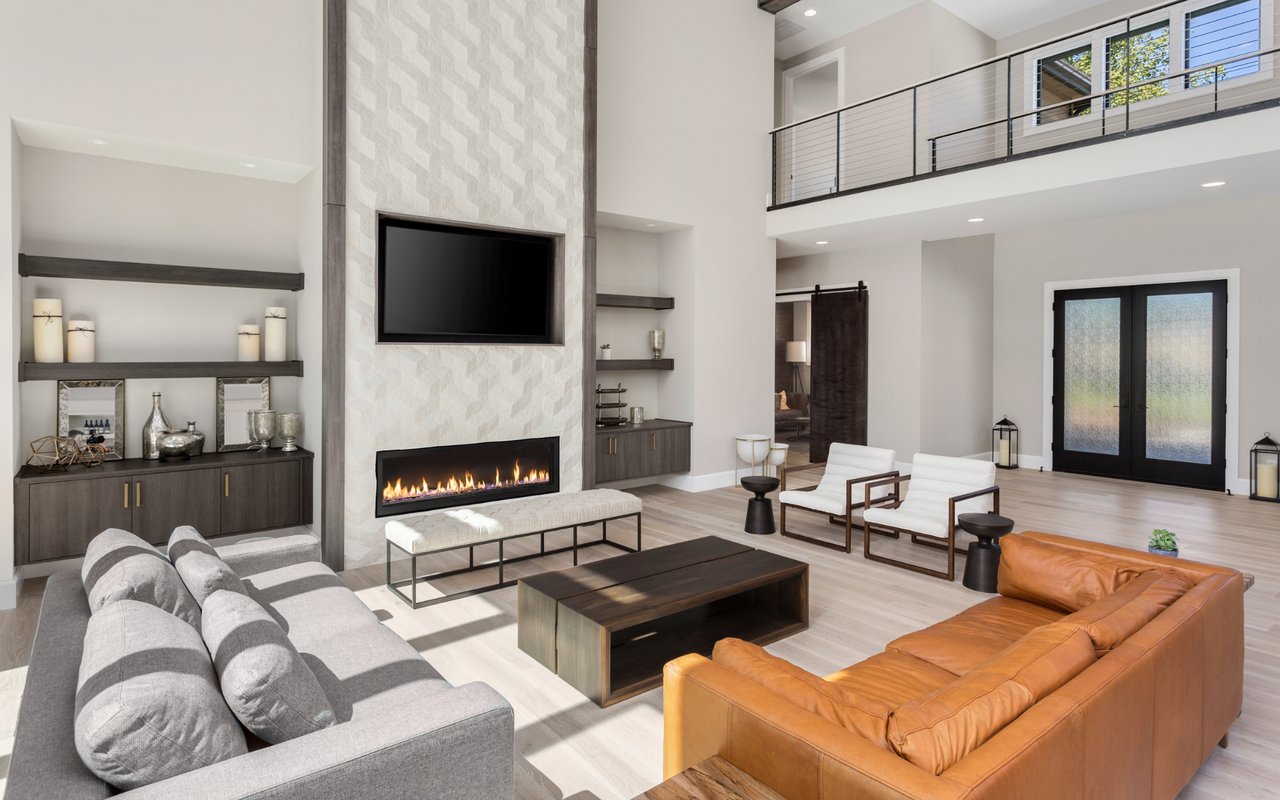
For many wealthy older Americans, the ideal retirement home isn't smaller—it's a place designed for family, entertaining, and aging in place.
For decades, the conventional wisdom surrounding retirement and homeownership was straightforward: once the children leave home, empty nesters should sell their larger properties and move into something smaller, simpler, and less expensive.
But a growing number of affluent baby boomers are challenging that assumption.
Rather than trading a large family home for a smaller property, some older homeowners are moving in the opposite direction. They're purchasing larger residences, expanding the homes they already own, adding guesthouses and accessory dwelling units, and investing in custom features that allow them to comfortably age in place.
For Angela and Victor Martino, the decision was personal.
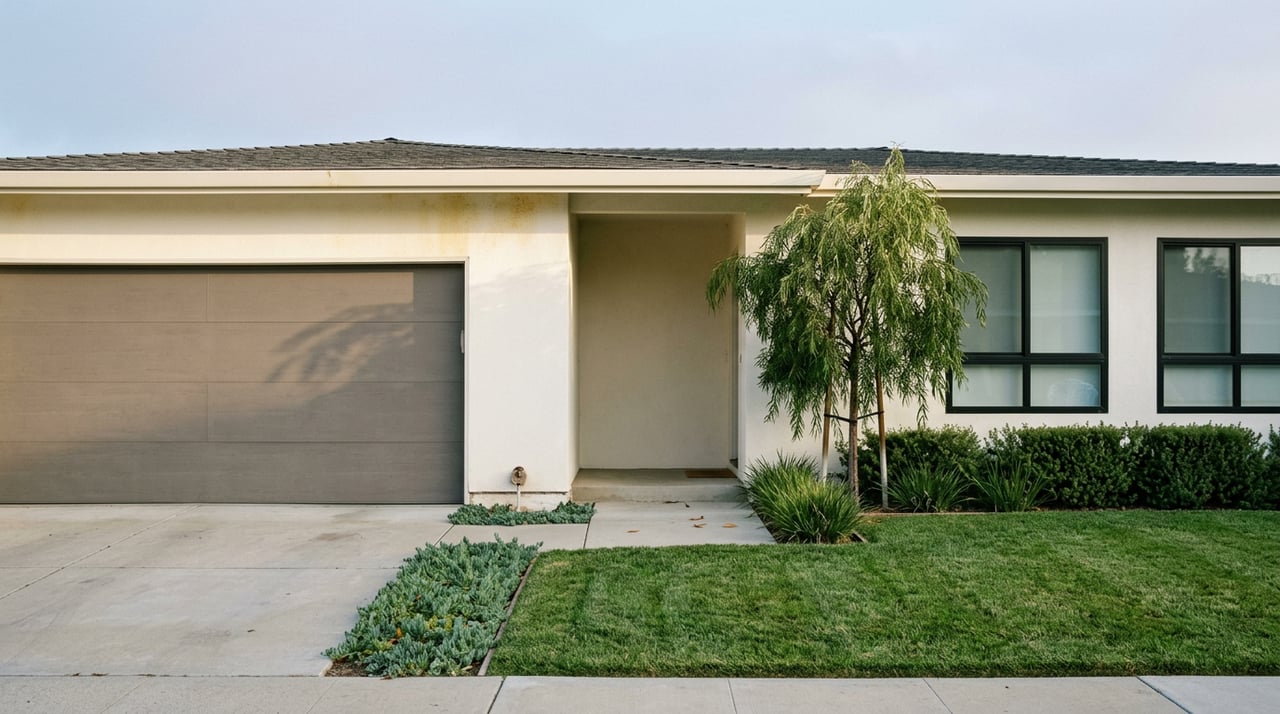
The couple had raised their two daughters in a ranch-style home of fewer than 2,000 square feet. Years later, after becoming empty nesters, they purchased the approximately 5,000-square-foot house next door in Denair, California.
A year-long renovation transformed the property into a home designed around their lifestyle and their growing family. The kitchen now accommodates the commercial meat slicer Victor uses to prepare prosciutto for family gatherings. A playroom with polished concrete floors was designed to withstand visits from their seven grandchildren. The primary bathroom also includes accessibility features intended to make everyday use easier as they grow older.
For Victor, 64, the idea of downsizing isn't part of the plan.
The Martinos' story reflects a broader shift in how some financially comfortable boomers are approaching their later years. Instead of seeing retirement as a time to reduce their footprint, they're creating homes that accommodate extended family, frequent entertaining, personal interests, and the realities of aging.
The Rise of the Boomer Upsizer
The traditional retirement strategy has often centered on selling a large family home and purchasing something smaller. The financial logic is familiar: lower housing costs, less maintenance, and potentially more money available for retirement.
Yet affluent boomers are increasingly rewriting that narrative.
Some are purchasing larger properties. Others are investing heavily in renovations and additions. Guesthouses, gourmet kitchens, spacious gathering areas, first-floor primary suites, and thoughtfully integrated accessibility features are becoming part of the equation.
Data from the National Association of Realtors indicates that the desire for additional space is becoming more common among older buyers. Approximately 7% of buyers between the ages of 61 and 70 reported that wanting more space was the primary reason for choosing their new home, compared with 4% in 2016.
The trend is particularly notable among wealthier households.
Baby boomers and older generations collectively hold approximately $110 trillion in wealth, giving many the financial capacity to pursue larger homes and substantial renovations. Years of home appreciation and investment gains have also contributed to their purchasing power.
For financial adviser April Tardiff, the shift is clear. Of the eight clients who retired this year, every one chose to move into a larger home. In the five years prior, she had seen only one client downsize.
"The historic retirement play of sell your home and buy a smaller one just isn't happening," Tardiff said.
Boomers Already Hold a Significant Share of Larger Homes
The preference for space is occurring within a housing market where boomers already have a substantial presence.
According to Redfin, empty-nest baby boomers owned 28% of U.S. homes with three or more bedrooms in 2024. By comparison, millennials with children owned 16% of these homes.
Boomers also represented approximately 42% of all home buyers, according to the National Association of Realtors—the largest share among the generations.
Their financial position can create an additional advantage. Many older buyers can make all-cash offers, potentially putting them in a stronger position than younger purchasers who depend on mortgage financing.
For some, the motivation isn't simply about owning more square footage. It's about creating a home that supports the way they want to live.
Today's boomers often envision remaining active well into their 80s and 90s. They may want expansive kitchens for entertaining, multiple guest bedrooms for visiting children and grandchildren, or dedicated spaces where family members can stay for extended periods.
In that sense, the larger home becomes less about empty rooms and more about creating a place where family life can continue to unfold.
The Pandemic Changed How Empty Nesters Think About Home
Interior designer Wendy Glaister noticed an increase in empty-nest clients choosing to upsize following the COVID-19 pandemic.
The experience of lockdowns encouraged many people to place greater value on time spent with family and friends. At the same time, remote and hybrid work arrangements made it easier for adult children to stay for longer visits.
Strong stock market performance and significant increases in home values also helped make these moves more financially feasible for some households.
As a result, some couples began viewing their later-life homes not as transitional properties, but as the residences they had always dreamed of owning.
Glaister describes this approach as an opportunity to celebrate a lifetime of work and achievement by investing in a home that truly suits the owners' aspirations.
For those who have collected artwork, antiques, or other meaningful possessions, downsizing can also present practical challenges. One of Glaister's clients found that moving into a smaller home made it difficult to accommodate an extensive art collection.
For these homeowners, moving up in size can feel less like excess and more like an intentional investment in the lifestyle they want to enjoy.
Designing a Home Around Family
Many of today's boomer upsizers are also thinking beyond their immediate needs.
Some are accommodating adult children who continue to live at home. Others want to provide comfortable space for aging parents. And many are creating beautifully designed guest quarters where children and grandchildren can stay when they visit.
The Martinos are a prime example.
The couple owns a farm and dried-fruit business and regularly hosts Thanksgiving, Christmas, birthdays, and other family celebrations. Their two adult daughters and grandchildren live nearby, and the grandchildren—ranging from ages 1 to 14—sometimes stay overnight when their parents are away.
The home also serves as a setting for entertaining business associates.
Angela, 63, embraces the active lifestyle the home makes possible, while acknowledging that maintaining such a busy household can sometimes prompt questions about how long they will be able to sustain it.
For the Martinos, however, the ability to gather everyone under one roof remains a central part of the home's purpose.
Some Boomers Are Moving Closer to Family
Upsizing doesn't always mean staying in the same community.
For some older homeowners, the search for a larger residence is also an opportunity to relocate closer to children and grandchildren—or to move to a destination they have always dreamed of calling home.
Ed and Mary Smith took this approach.
Their three adult children had settled in the Boston area, approximately five hours from the couple's home in suburban New Jersey. As their children began raising families of their own, frequent visits became increasingly difficult.
In 2022, the couple purchased a roughly 4,000-square-foot property in Falmouth, Massachusetts, on Cape Cod. The home was approximately 500 square feet larger than their previous residence.
The nearly $2 million purchase was funded by proceeds from selling their New Jersey property and a smaller vacation home they had previously owned in Falmouth.
The new residence includes a first-floor primary suite, while the second floor provides space for their children and six grandchildren.
The arrangement has worked particularly well during the summer, when at least one of their children and their family visits roughly every other weekend.
For Ed, 81, the appeal is straightforward: they created a home in a place their family genuinely wants to visit.
Retirement Planning Is Changing, Too
The growing number of affluent boomers who choose to upsize is also forcing financial advisers to reconsider traditional retirement strategies.
In the past, financial plans often assumed that clients would sell a larger home, purchase something smaller, and use the difference to reduce expenses or strengthen their retirement finances.
Now, advisers may instead need to help clients determine how to afford the larger home they envision for their later years.
Tardiff notes that this can sometimes mean encouraging clients to work longer than originally planned.
The financial planning equation after retirement, she suggests, has fundamentally changed.
There are also practical reasons some homeowners are reluctant to downsize.
Selling a long-held property that has appreciated substantially can create significant capital-gains considerations. At the same time, smaller homes are not always easy to find—and in some markets, they can command surprisingly high prices.
For affluent homeowners, staying in or moving into a larger property can therefore make both lifestyle and financial sense.
Aging in Place—Without Sacrificing Luxury
For boomers who do choose larger homes, design is increasingly focused on creating properties that can evolve alongside their owners.
Interior designer Samara Goodman says her older clients are incorporating features that make aging in place more comfortable without compromising the visual quality of their homes.
Instead of traditional institutional-looking grab bars, for example, homeowners are choosing high-end options designed to coordinate with faucets, hardware, and other bathroom finishes.
Privacy is another priority.
Large homes can provide separate primary suites away from communal areas, while backyard accessory dwelling units, or ADUs, offer independent accommodations for visiting adult children and extended family.
The goal is to create flexibility without sacrificing elegance.
The ADU as a New Family Gathering Space
Kit Stolz and Valerie Levett offer another example of how older homeowners are adapting their properties for multigenerational living.
The couple moved to a rural community outside Ojai, California, in 1991, when their two daughters were young. Four years ago, they invested approximately $200,000 to convert a backyard office into an ADU.
The independent space includes a kitchenette, bedroom, and bathroom and was designed primarily for family visits.
The arrangement became especially meaningful when the couple's younger daughter and her husband—who live in Washington, D.C., but were able to work remotely—stayed in the ADU following the birth of their baby in 2024.
Stolz and Levett, now 71 and 75, were able to help care for their grandchild, giving the new parents an opportunity to rest.
"It was a great experience," Stolz said.
The couple later invested another $200,000 in updating their kitchen and porch, which had remained largely unchanged since the 1970s. The renovated kitchen now includes a new induction range, which Stolz enjoys using to experiment with seafood recipes.
The projects were financed through a combination of inherited funds and an insurance settlement related to wildfire damage.
Although a retirement community is located nearby, the couple's local friends have largely chosen to remain in their existing homes.
Stolz believes they are part of a generation that may be less willing than previous generations to leave the homes and communities they have built their lives around.
A New Vision of Luxury Retirement
The traditional image of retirement downsizing is being replaced, at least for some affluent homeowners, by a very different vision.
For these boomers, the ideal home may be larger—not smaller—with enough room for family gatherings, private guest quarters, entertaining, hobbies, and future accessibility.
The shift reflects more than financial resources. It represents changing priorities around family, longevity, wellness, and the meaning of home.
For many, a luxury residence is no longer simply a place to live through retirement. It is a space designed to accommodate the people they love, support the lifestyle they have worked toward, and remain adaptable as life changes.
In this new model of aging, the dream home may not be the smallest home that meets your needs. It may be the one that gives you room to live more fully.
Thinking About Your Next Chapter?
The right home can evolve with you, whether you're looking for a residence with room for extended family, a property suited for multigenerational living, or a luxury home that allows you to age in place without compromising on design.
If you're considering a move, renovation, or investment in the South Bay, let's connect. I can help you explore properties that align with your lifestyle today—and the way you envision living for years to come.