Wondering why two Mira Costa homes with similar lot sizes can have very different remodeling or expansion potential? In this part of Manhattan Beach, zoning can shape everything from how much you can build to where an addition can sit on the lot. If you are buying, selling, or planning updates, understanding a few key zoning basics can help you make smarter decisions and avoid costly surprises. Let’s dive in.
Why zoning matters in Mira Costa
In Mira Costa, a home’s potential is not defined by square footage alone. The real story often comes down to the property’s area district, zoning classification, lot dimensions, grade, and existing footprint.
That matters because Manhattan Beach uses area districts along with zoning districts and overlays. The current zoning map places the Mira Costa High School area within the inland residential grid labeled Area District I, which can create a different development picture than other parts of Manhattan Beach.
Area District I changes the rules
One of the biggest factors in Mira Costa is that development standards are closely tied to area district. In Area District I, the code sets a minimum lot area of 7,500 square feet for RS, RM, and RH districts, with a minimum lot width of 50 feet, a 20-foot front setback, and maximum heights ranging from 26 to 30 feet depending on zone.
Those standards are very different from the more compact rules used in other Manhattan Beach area districts. In Area Districts III and IV, for example, minimum lot area can be 2,700 square feet, minimum width can be 30 feet, and front setbacks can be just 5 feet. That difference helps explain why two homes in the same city may have very different renovation options, even if their lot sizes seem close on paper.
Lot size is only part of the picture
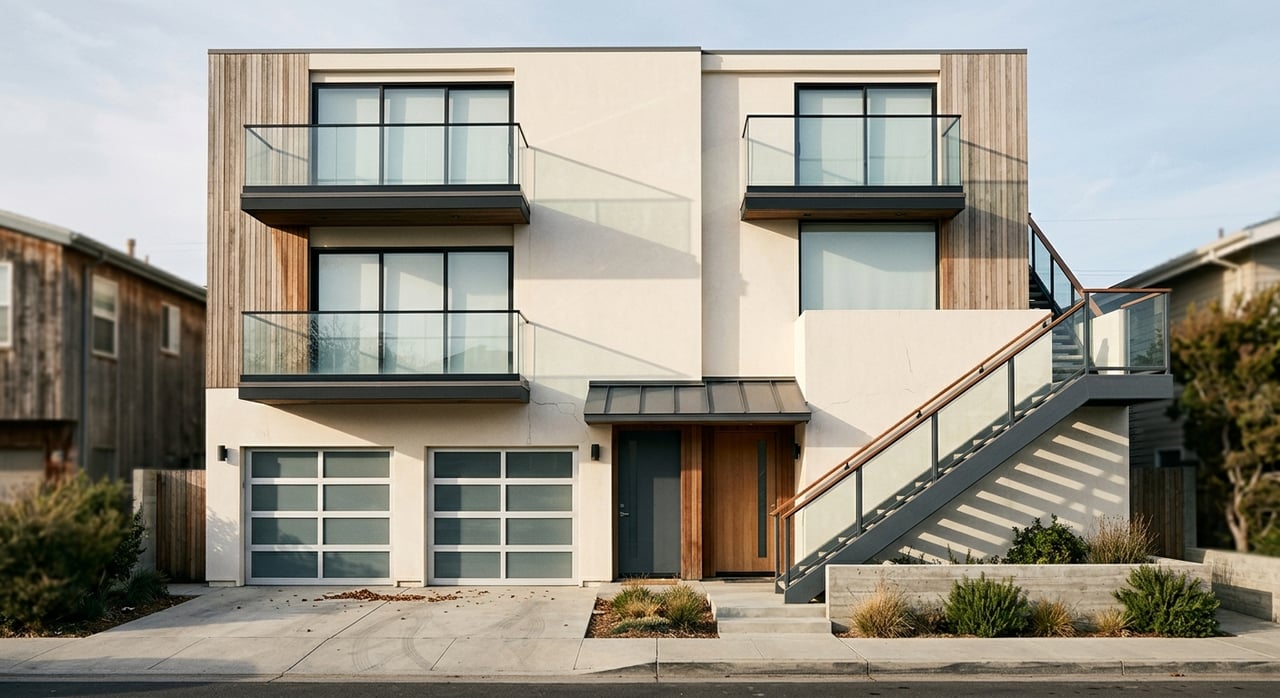
It is easy to assume a larger lot always means more freedom to build. In practice, lot width, lot depth, and setbacks can matter just as much as total lot area.
A wide lot may offer more flexibility for layout, garage placement, or yard design. A deeper lot may make it easier to work within front and rear setback rules. On the other hand, a lot with unusual geometry can limit how efficiently the buildable area can be used.
Manhattan Beach also publishes handouts for lot depth, lot width, driveway clearances, and accessory structures. That is a practical sign that parcel shape and access are common issues in real residential projects.
Existing improvements can affect future options
In Mira Costa, zoning analysis is not only about what the parcel looks like today. The current house footprint and prior permit history can also influence what comes next.
The city calculates buildable floor area using lot area and a floor-area factor, while excluding certain parking and basement areas. The code also notes that some preexisting unmerged developed lots that exceed the maximum lot area may continue as one lot until new construction, enlargements, or alterations trigger current compliance.
That means a homeowner may not be starting from a blank slate. If you are evaluating renovation potential, the existing structure and the property’s permit history can be just as important as the parcel’s gross square footage.
Grade can change the design conversation
Mira Costa is generally flatter than some other parts of Manhattan Beach, but that does not mean grade can be ignored. The city’s master plan describes Manhattan Beach as a series of peaks and valleys, while land east of the dune ridge is generally flat to gently sloping rather than steeply hilly.
For many Mira Costa properties, that means topography may be less dramatic than in the Hill Section, but local grade still matters. Even mild slope can affect how height is measured and how a design is reviewed.
How height is measured
In Manhattan Beach, building height is measured from local grade. Local grade refers to the ground adjacent to the building under the city’s measurement rules, and it can vary around the perimeter of the house.
This is why section drawings are often important on sloped or uneven lots. A design that seems straightforward from the street may look very different once the city reviews grade changes around the full structure.
Why lower levels are not always simple
Basements and lower levels can add flexibility, but they are not automatically treated as bonus space. Manhattan Beach’s basement and story guidance says a basement can count as a story if the finished floor is more than 4 feet above local grade for more than 50 percent of the perimeter, or more than 6 feet above local grade at any one point.
That can affect both story count and apparent massing. So if you are thinking about a lower level on a lot with grade variation, it is important to understand that the design may have zoning implications beyond interior square footage.
ADUs add another layer of value
Accessory Dwelling Units are now part of the value conversation for many Mira Costa properties. The city states that ADUs that meet state law are permitted in areas zoned for single-family or multi-family residential uses, and JADUs are permitted in single-family residential zones.
Manhattan Beach also adopted revised ADU and JADU regulations on April 1, 2025, effective May 1, 2025. For buyers, that can mean more flexibility. For homeowners and sellers, it can affect how a property’s future use and long-term utility are viewed.
Why buyers should verify zoning early
If you are buying in Mira Costa, zoning should be part of your due diligence early in the process. It can help you confirm whether your renovation goals match the property before you get too far down the road.
The city requires a Residential Building Report before a sale, and that report shows the property’s regularly authorized use, occupancy, and zoning classification. The city’s GIS parcel reports can also provide zoning and parcel data, making them useful tools for understanding whether a lot is conforming, oversized, or subject to practical constraints.
Why sellers should understand the envelope
If you are selling, zoning knowledge can help you position the home more accurately. A property’s appeal may not be limited to its current layout. It may also include unused buildable envelope, lot width, garage or yard potential, or possible ADU flexibility.
At the same time, it is important to present that potential carefully and factually. Buyers tend to respond well when the opportunity is explained clearly, with realistic context based on the property’s zoning, parcel characteristics, and existing improvements.
A smart way to think about home potential
In Mira Costa, the best way to evaluate home potential is to look at the whole picture. That includes area district, lot dimensions, setbacks, height limits, grade, current footprint, and whether there is meaningful room left within the allowed building envelope.
When you understand those pieces together, you can make better decisions whether you are buying a home to improve, preparing to sell, or planning for long-term value. In a neighborhood where privacy, real backyards, and inland lot patterns often attract interest, zoning is a major part of what shapes opportunity.
If you want help evaluating how zoning may affect a specific Mira Costa property, pricing its future potential, or positioning it for the market, Rachel Ezra can guide you with local insight and a thoughtful, high-touch approach.
FAQs
How does zoning affect home potential in Mira Costa?
- Zoning can influence lot coverage, setbacks, height, floor area, story treatment, and whether features like additions or ADUs may fit within the property’s buildable envelope.
What area district is common around Mira Costa in Manhattan Beach?
- The current zoning map places the Mira Costa High School area within Area District I, which has different residential development standards than some other parts of Manhattan Beach.
Why do two Manhattan Beach lots with similar size have different remodel potential?
- Lots can differ by area district, width, depth, setbacks, grade, and existing footprint, all of which can change how much of the parcel is realistically buildable.
How is building height measured for a Mira Costa home?
- Manhattan Beach measures building height from local grade, and local grade can vary around the building perimeter under the city’s code rules.
Can a basement count as a story in Manhattan Beach?
- Yes. A basement can be treated as a story if the finished floor is more than 4 feet above local grade for more than half of the perimeter, or more than 6 feet above local grade at any point.
Are ADUs allowed on Mira Costa residential properties?
- The city says ADUs that meet state law are permitted in single-family and multi-family residential zones, and JADUs are permitted in single-family residential zones under the city’s updated regulations.
What should buyers review before purchasing a Mira Costa property for renovation?
- Buyers should review the Residential Building Report, zoning classification, GIS parcel data, lot dimensions, grade conditions, and existing improvements to better understand the property’s development potential.